A Simple Guide to Choosing the Right Wheelchair Ramp for Your Home
For safe, easy, and comfortable access you need to choose a ramp that’s perfect for your home. With so many options available, it’s important to understand your specific needs and the different types of ramps available.
This guide will take you through all the essentials, making the decision-making process simple and stress-free.
Get expert ramp advice today and choose the right solution for your home with confidence.
For a clearer starting point, explore our residential ramp options for doorways, steps and longer-term home access.
1. Your Needs
To choose a ramp, start by identifying what you require from the ramp:
- Who Will Use It?
Will you use the ramp independently, or will you have assistance? If you will use it independently, especially with a manual wheelchair, you may benefit from gentler slopes for easier movement. - What Type of Mobility Equipment Do You Have?
Consider the equipment being used, such as a manual wheelchair, power chair, scooter, or walker. This will influence your ramp’s design and weight capacity requirements.
2. How Steep Should Your Ramp Be?
The ramp’s gradient (or slope) plays a critical role in its usability and safety. Here are some general guidelines:
- 1:6 (10°): Suitable for short ramps, like those bridging small thresholds. Use with caution as it may be steep.
- 1:8 (8°): A practical choice for portable ramps or when assistance is available.
- 1:12 (5°): The most common recommendation for residential ramps, often required by Building Regulations Document M for installed ramps.
- 1:15 (4°): Preferred for independent or public access, offering a very gentle slope.
Space Constraints: If space is limited, steeper gradients might be better, but it’s essential to ensure they remain safe and navigable.
For instance, a 1:8 gradient can be suitable in certain situations, especially when an assistant is helping you.
Note: For steeper gradients, wheelchairs may need to descend backward. Always assess safety carefully.
3. How Long Should the Ramp Be?
To determine the appropriate ramp length:
- Measure the Height:
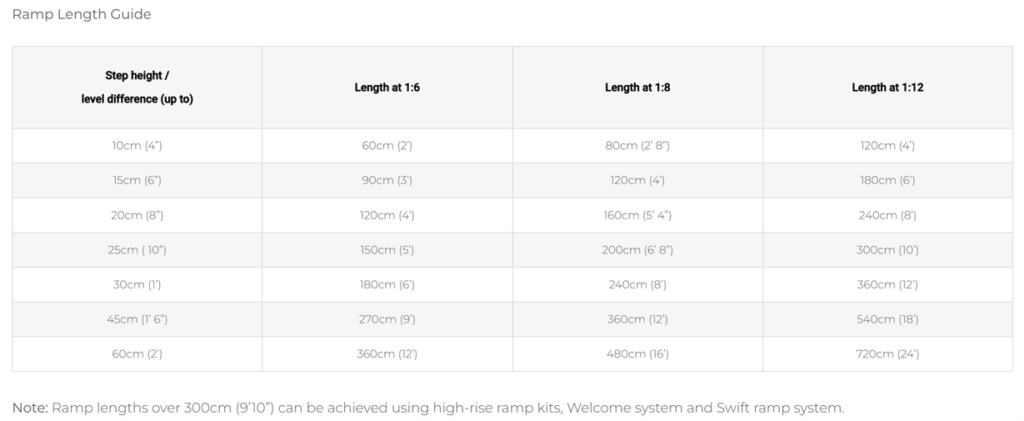
Measure the vertical distance of the step, threshold, or entry point. Once you have the height, use this handy guide to decide the ramp length:
- Consider Space Constraints:
If space is tight, you may need to use platforms to change the ramp’s direction. For longer ramps (over 300cm), options like high-rise ramp kits, or the Welcome modular system are excellent solutions.
Request a home assessment to get accurate measurements and the safest ramp solution for your property.
4. Choose the Right Ramp Type
Once you’ve calculated the required gradient and length, choose a ramp that best suits your needs:
- Portable Ramps:
Perfect for temporary or flexible use. For example, the Aerolight-Xtra is lightweight, foldable, and easy to store. - Threshold Ramps:
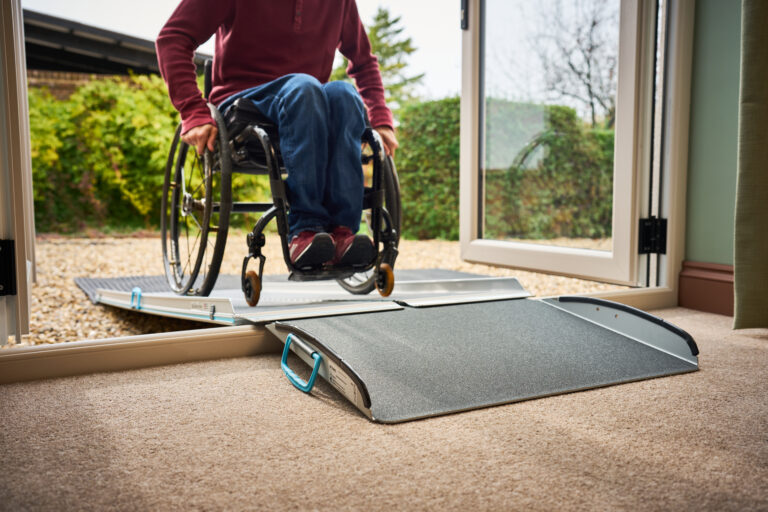
Designed for small height differences at doorways, like the Doorline-Threshold wedge. - Modular Ramps:
These customisable ramps, such as the Welcome Modular Ramp System, are great for permanent or semi-permanent solutions and can be adapted as your needs change. - Semi-Permanent Ramps:
Relocatable ramps like the Permaramp range offer durable solutions with features such as non-slip surfaces and edge protection.
Compare ramp types and find the best solution for your home and mobility needs.
5. What Type of Ramp Do You Need?
The type of ramp depends on the specific application. Here’s a quick breakdown:
Where a full ramp is unnecessary, a half step can reduce the height of a doorstep and provide a more manageable route into the home.
Ramps for Steps or Stairs:
Ramps for Wood/Level Access Doors:
Threshold Ramps for PVC Doors:
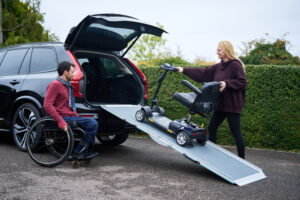
Vehicle Ramps (for Cars):
If you are still comparing formats, browse the full range of ramps and access solutions before narrowing your choice.
6. Get in Touch for Expert Help
Not sure which ramp to choose? The team at Enable Access is here to help you choose a ramp for your home. All our ramps are Made in Britain to excellent standards and designed for British doorsteps. With expert advice and tailored solutions, we’ll help you choose a ramp that is suitable for your needs and wants, ensuring you’ll find the perfect ramp for your home, giving you safe, reliable access and enhancing your independence.
Speak to our ramp specialists today for a tailored recommendation or request a quote.
+44 (0)20 8275 0375
sales@enable-access.com