


Understanding wheelchair ramp regulations in the UK is essential for ensuring safe, compliant and truly accessible environments in both residential and commercial settings. Whether you are a homeowner, landlord, or business operator, compliance with modern accessibility rules is more than just a legal hurdle, it is a foundational element of creating inclusive spaces.
At Enable Access, we support organisations and individuals in understanding wheelchair ramp regulations across the UK and applying them to practical, real-world scenarios. This guide explains the key ramp-building regulations for the UK, common gradient rules, wider accessibility requirements, and how modern compliance expectations are increasingly linked to practical safety planning.
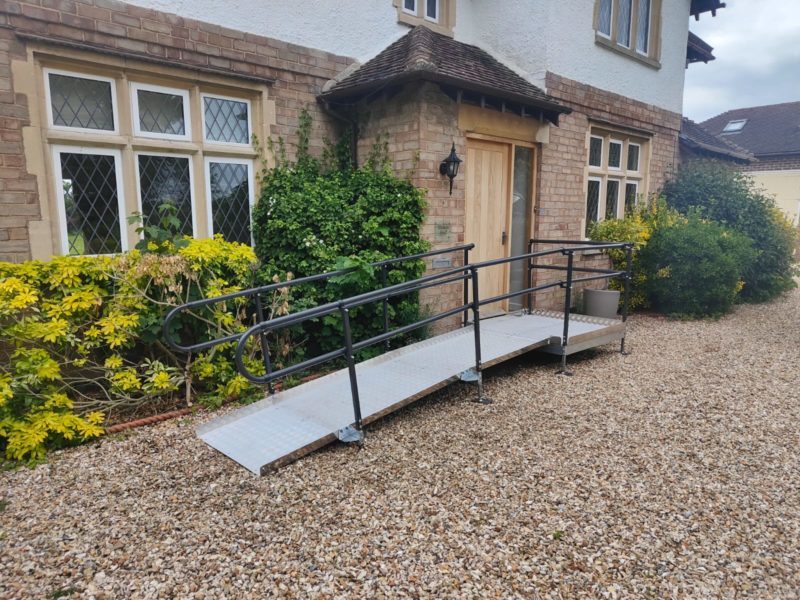
Ramp building regulations in the UK are fundamentally defined under Approved Document M (Access to and Use of Buildings) and Approved Document K (Protection from Falling, Collision and Impact) within the UK Building Regulations framework.
2026 Compliance Note: While these documents establish the core legal baseline, the Building Safety Regulator (BSR) actively reviews and oversees these standards to ensure they meet modern physical demands. In addition to physical accessibility requirements, 2026 guidance increasingly aligns building access with person-centred safety planning in multi-occupancy and residential environments.
Modern accessibility expectations go beyond basic compliance. Under the Equality Act 2010, there is a strong emphasis on “Inclusive Design.” This means a ramp should not just be designed for a standard manual wheelchair; it must safely accommodate modern electric wheelchairs, heavier mobility scooters, walking aid users and parents with pushchairs.
In 2026, accessibility compliance is increasingly linked with wider safety planning obligations, particularly in multi-occupancy and residential buildings. This includes stronger alignment between physical access solutions and emergency preparedness planning, ensuring that building design supports both everyday mobility and safe evacuation scenarios.
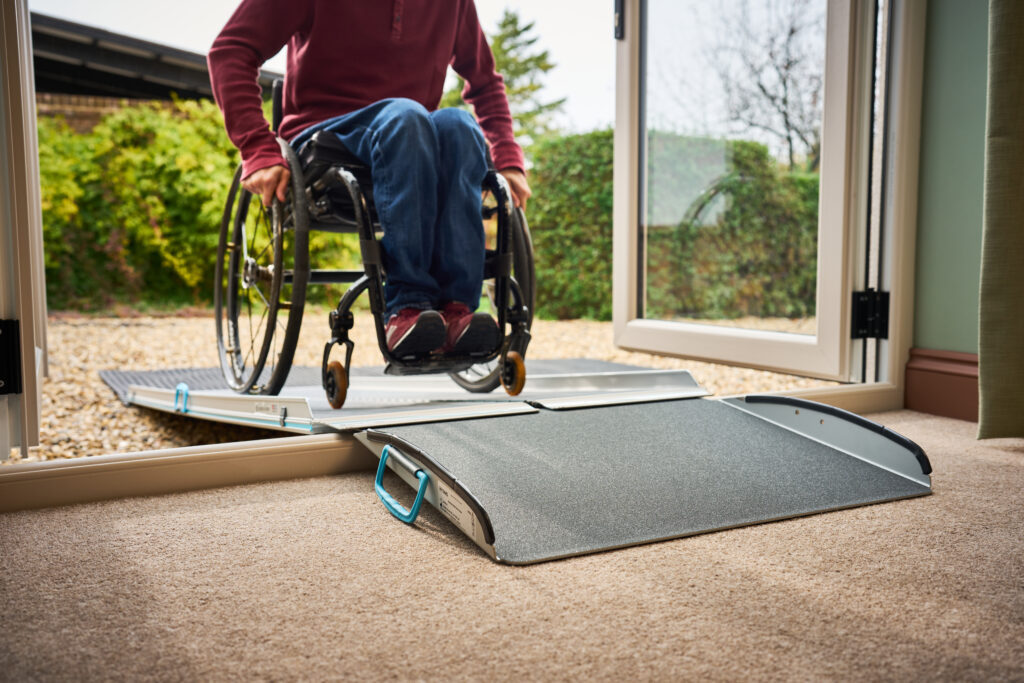
Wheelchair ramp regulations in the UK are governed by the Equality Act 2010 and structural guidance set out in Approved Document M (Access to and Use of Buildings) and BS 8300. These standards define the legal and technical requirements for safe and accessible ramp design in both residential and commercial environments.
The Equality Act 2010 requires service providers and building operators to make reasonable adjustments where physical barriers restrict access. In practice, this makes ramp compliance UK a legal requirement in many public and commercial settings.
Approved Document M and BS 8300 provide the technical framework for ramp design, covering gradient, width, landings and safety features. In 2026, compliance expectations continue to focus strongly on safe, inclusive and practical real world usability.
Recent guidance updates also reinforce that accessibility planning must be assessed alongside realistic operational use. This means compliance is not only about meeting structural standards but also ensuring that the intended users can safely and practically use the environment under real conditions.
When building or installing a ramp, specific physical thresholds must be met to satisfy building inspectors and accessibility audits.
Feature | Residential Standard (Vol. 1) | Commercial & Public Standard (Vol. 2) |
Minimum Clear Width | 900 mm | 1500 mm (allows space for turning or passing) |
Maximum Gradient | Preferred 1:20; max 1:12 for very short runs | Strict sliding scale: 1:12 (max 2m length), 1:15 (max 5m length), 1:20 (max 10m length) |
Level Landings | Required at top and bottom (min 1200mm) | Required at top, bottom, and every 10m maximum (min 1500mm x 1500mm) |
Handrails | Recommended if rise exceeds 300mm | Mandatory on both sides if the total rise exceeds 300mm or length exceeds 2m |
Edge Protection | Side barriers or raised curbs required | Mandatory upstand of at least 100mm to prevent wheels from slipping off |
Residential ramps are generally guided by Approved Document M Volume 1, while commercial and public buildings must comply more strictly with Volume 2 and BS 8300 under accessibility requirements UK.
Need help applying these ramp building regulations to a real site? Our team can assess your layout and recommend fully compliant access solutions tailored to your environment and usage requirements.
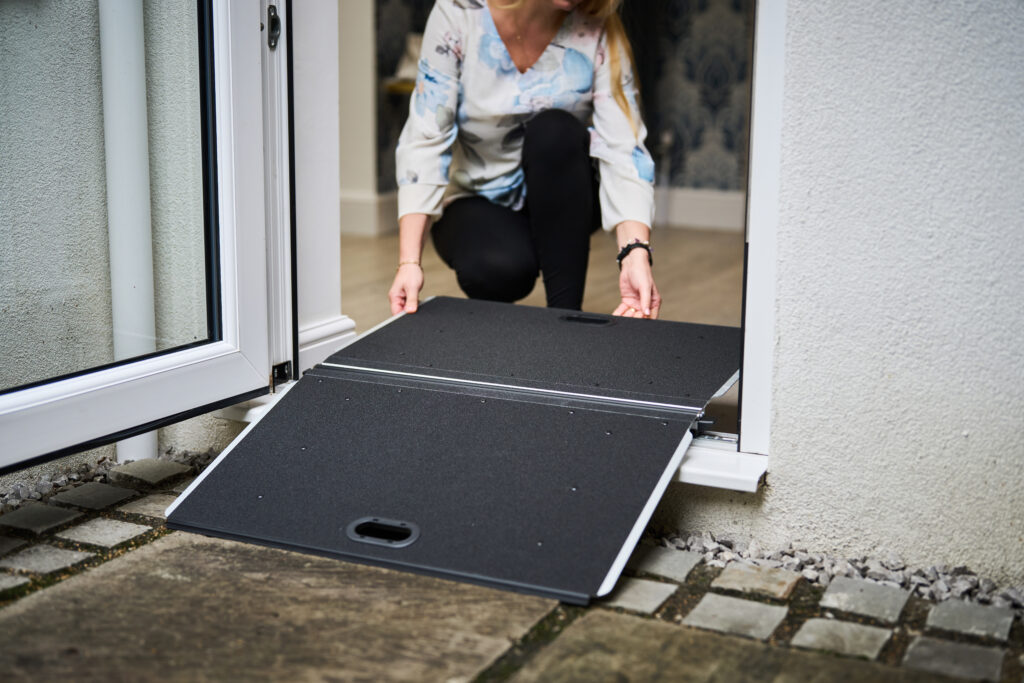
Accessibility requirements in the UK differ depending on whether the building is residential or commercial.
From 2026, residential safety planning in certain housing settings is increasingly supported by person-centred fire risk assessments, ensuring that mobility and evacuation needs are evaluated at an individual level where relevant.
In both cases, ramp compliance plays a key role in ensuring safe and practical access solutions are implemented correctly.
From 2026, accessibility in residential buildings is no longer just about physical access. Under the Fire Safety (Residential Evacuation Plans) (England) Regulations 2025, there is now a legal requirement in England to plan how residents who cannot self-evacuate will be supported during an emergency.
This introduces Person-Centred Fire Risk Assessments (PCFRA), which evaluate whether evacuation is realistic for each individual and what support or equipment is needed. As a result, features like wheelchair ramps must not only meet UK ramp building regulations but also be usable in real emergency situations.
Where support is accepted, a written evacuation plan must be in place, clearly outlining how evacuation will be carried out. Any access routes, including ramps, must be practical, safe and aligned with the resident’s needs.
Overall, compliance now goes beyond installation. Ramps and access solutions must support both everyday use and safe evacuation, ensuring they work in real-world conditions, not just on paper. With consent, relevant evacuation details may also need to be shared with local Fire and Rescue Services to support emergency response planning.
Any evacuation method or equipment must also consider whether trained staff or assistance is realistically available when needed.
Whether you legally need a ramp depends on the building type and situation.
Under UK wheelchair ramp regulations, ramps are required where reasonable adjustments are necessary to provide safe access. Businesses must comply with accessibility requirements, which may include installing ramps where steps create barriers. Homeowners are not always legally required to install ramps, but they are strongly recommended for safety and independence.
In residential care and multi-occupancy environments, accessibility planning may also form part of wider emergency evacuation documentation, including written evacuation instructions and individually assessed support arrangements where required.
In terms of ramp compliance in the UK, failure to provide reasonable access solutions in commercial settings may result in legal challenges under equality legislation.
Many accessibility issues arise from incorrect interpretation of wheelchair ramp regulations in the UK.
Common mistakes include:
A growing compliance issue in 2026 is designing access solutions that meet technical standards but are not practical in real-world use. Regulators increasingly expect that ramps and access routes are not only compliant on paper but also usable under actual operational conditions.
These mistakes can lead to unsafe environments and non compliant access solutions.
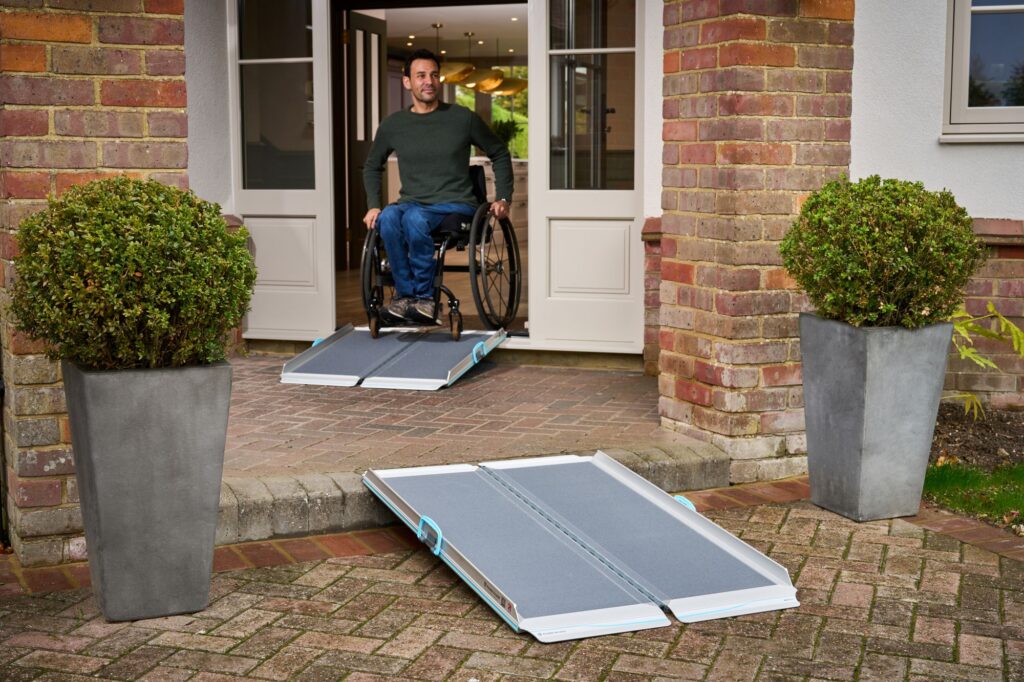
Wheelchair ramp regulations in the UK have a direct impact on design and pricing.
For example:
Understanding accessibility UK requirements helps ensure that cost decisions are based on safety and legal compliance rather than just initial price.
In many cases, compliant designs offer better long term value and reduce maintenance issues. Modern compliance expectations also encourage early-stage planning that considers long-term usability, maintenance requirements and adaptability, particularly in buildings where user needs may change over time.
Selecting the right ramp requires understanding UK wheelchair ramp regulations and how they apply to your environment.
Common options include:
Each option must meet ramp building regulations where applicable, especially in commercial environments where accessibility requirements are enforced.
Ensuring ramp compliance in the UK is essential when choosing any access solution, particularly in public or high traffic areas.In modern accessibility planning, compliance is increasingly viewed as part of a wider safety and inclusivity strategy, ensuring that both everyday access and emergency preparedness are considered together.
If you are comparing ramp options and want to ensure full ramp compliance in the UK, Enable Access can guide you in selecting the right portable, modular or permanent system based on your site conditions and long-term accessibility needs.
Understanding wheelchair ramp regulations in the UK is essential for creating safe, accessible and compliant environments. Whether you are adapting a home or managing a commercial building, following ramp building regulations UK and meeting accessibility requirements ensures safety and inclusivity.
At Enable Access, we help simplify ramp compliance by offering expert guidance and practical solutions tailored to real world needs. If you are unsure about the right approach, professional support can help you choose the safest and most compliant option.
If you need help selecting a compliant ramp solution, Enable Access can assess your site and recommend fully compliant options.