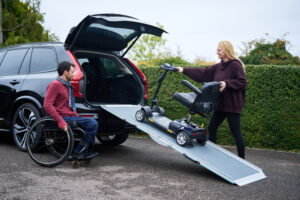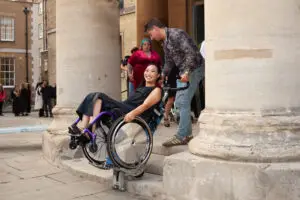


Providing safe and accessible entry to your premises is essential for every business. Whether you oversee a construction site, run a retail space or manage an event venue, selecting the right ramp solution can have a meaningful impact on safety, compliance and operational efficiency. Modular ramp systems and Scaffolding ramps are among the most widely used options, each designed to meet different needs.
This guide will walk you through the key differences between these solutions, their practical applications, and help you determine which type of ramp is best suited for your business.
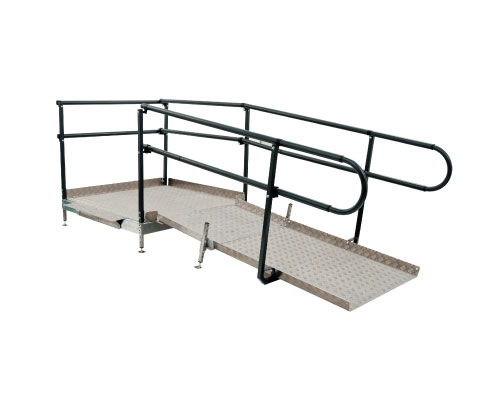
Modular ramp systems consist of pre-fabricated sections that can be easily configured, assembled and adjusted to accommodate a wide range of entrances, heights and layouts. Designed for both flexibility and durability, they offer businesses a reliable, long-term solution for accessibility needs.
Key Features:
Customisable dimensions: Sections can be added, removed or reconfigured to fit different doorways, platforms or site layouts.
Durable construction: Made from high-quality aluminium or steel, modular ramps provide stability and long-lasting performance.
Enhanced safety: Anti-slip surfaces, secure handrails, and edge protection ensure compliance with accessibility regulations.
Relocatable design: Many systems can be moved between sites or adjusted as operational needs change, providing versatility for evolving business requirements.
These systems are ideal for companies that require repeated or long-term accessibility solutions, or for businesses looking to install ramps for businesses in areas where permanent structures aren’t feasible.
Scaffolding ramps are temporary ramp solutions that businesses can hire for a set period rather than purchasing outright. They are particularly suited for short-term projects, events or situations where temporary accessibility is required.
Key Features:
Short-term use: Perfect for events, temporary construction access, renovations or seasonal requirements.
Ready-to-use: Designed for rapid installation with minimal setup, eliminating the need for customisation.
Cost-effective: Provides full accessibility without the upfront investment of purchasing a permanent or semi-permanent ramp.
Flexible: Businesses can easily adjust the number of ramps or their placement according to changing needs.
Scaffolding ramps are often modular in design as well, allowing them to be assembled quickly and relocated if necessary, making them one of the most practical options for short-term ramps for businesses or temporary public access.
Choosing the right ramp solution requires a clear understanding of how modular ramp systems and Scaffolding ramps differ. Below is a detailed comparison of their key features:
Feature | Modular Ramp Systems | Scaffolding Ramps |
Ownership | Purchased outright for long-term use; fully reusable. | Hired or leased for a set period; temporary solution. |
Customisation | Highly customisable: adjustable length, width and incline to fit unique site requirements. | Limited customisation; usually comes in standard, pre-configured designs. |
Best For | Long-term, repeated use; relocatable external ramps; sites with evolving accessibility needs. | Temporary projects, events, short-term access or seasonal requirements. |
Installation | May require professional guidance for setup; designed for durable, permanent placement. | Quick, often plug-and-play installation; ready to use immediately. |
Cost | Higher upfront investment but cost-effective over the long term. | Lower upfront cost; ideal for short-term or one-off needs. Very expensive for longer term needs or where a project is likely to take a number of months to complete. |
Flexibility | Can be expanded, reconfigured, or relocated as business needs change. | Flexible for short-term use but not designed for permanent or repeated long-term use. |
Maintenance | Durable materials require minimal maintenance over years. | Regular inspection may be needed, especially with frequent rentals. |
Compliance | Fully compliant with accessibility standards; can be tailored to meet specific regulations. | Designed to meet basic accessibility standards, but limited scope for custom compliance adjustments. |
Aesthetic & Integration | Can be designed to match site layout and appearance. | Functional design prioritised over aesthetics; may not blend seamlessly with surroundings. |
Durability | Built for heavy-duty use and repeated relocation. | Suitable for temporary use; may wear faster under prolonged or heavy use. |
Adaptability | Ideal for businesses that anticipate changing site configurations or long-term expansion. | Best for fixed, short-term applications where site changes are unlikely. |
Modular ramps are an excellent choice for businesses that need long-term accessibility solutions. They are particularly suited for offices, retail outlets and industrial facilities where permanent or semi-permanent access points are required. Their relocatable design also makes them ideal for businesses that frequently move equipment, manage temporary events or adjust site layouts. Additionally, modular ramps can be custom configured to accommodate unique entry heights, multiple doors or specific compliance requirements, providing a flexible and durable solution for evolving operational needs.
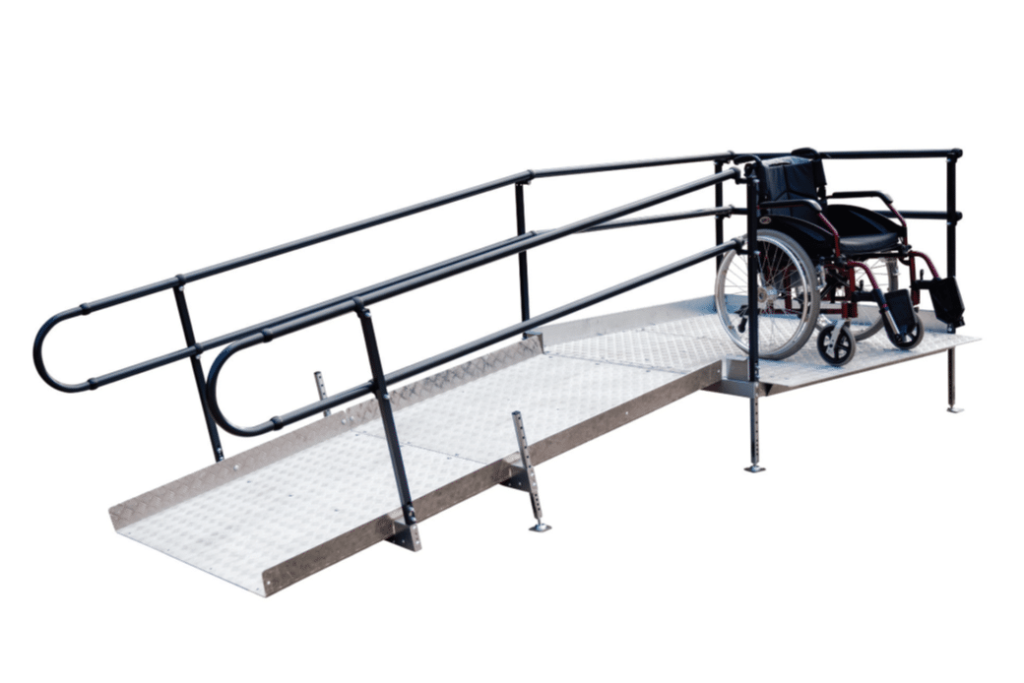
Scaffolding ramps are best suited for short-term requirements where temporary accessibility is needed. They are commonly used for renovations, temporary construction site access or pop-up retail spaces. Events and festivals also benefit from Scaffolding ramps, offering safe and compliant access for attendees over a limited period. Similarly, scaffolding ramps are practical for temporary public or client access, where ramps are only needed for a defined number of weeks or months. While both ramp types ensure safety, compliance and reliability, the choice between them typically depends on the duration of use and the level of flexibility required.
Choosing the right ramp solution depends on your business’s needs, the duration of use and budget considerations. Modular ramp systems are ideal for long-term, relocatable access, offering customisable designs that can adapt as your business grows or site layouts change. In contrast, scaffolding ramps provide a practical solution for short-term or temporary projects, delivering safe, compliant and cost-effective access without the need for permanent installation.

By carefully assessing your requirements and working with a trusted supplier, your business can ensure accessibility, safety and compliance while minimising disruption to daily operations. Whether you choose a modular system or a Scaffolding ramp, both options offer reliable, functional solutions to support modern business demands for accessible entrances.
The main difference lies in ownership and duration. Modular ramp systems are purchased for long-term, repeated use and can be customised or relocated. Scaffolding ramps are hired for a fixed period, ideal for short-term projects or events.
Both options are designed to meet safety standards. Modular ramps offer customisation and added stability for repeated use, while Scaffolding ramps are designed for immediate, temporary safety compliance.
The best choice depends on how long you need the ramp, how often it will be used, your budget and the level of accessibility required.
Choose a modular ramp system when you need a long-term or permanent solution that can be reused or relocated in future. Modular systems are sturdy, compliant and ideal for ongoing accessibility needs.
Choose a Scaffolding ramp when you only need a ramp for a short period, such as during temporary works or events. They are cost effective for brief use and can be removed easily once the project ends.