


In the UK, creating environments that are safe, accessible and inclusive is not only good practice, it’s increasingly expected by law, building standards and everyday users. Whether you’re a homeowner adapting your property, a facilities manager planning public access, or an occupational therapist advising on mobility solutions, understanding access ramps in the UK is essential.
This comprehensive guide covers everything you need to know about access ramps, disabled access ramps and DDA compliant ramps, including what they are, who needs them, legal standards and safety considerations, and practical tips to get it right the first time.
Speak to our access specialists today for expert advice on the right ramp for your needs.
Access ramps are sloped walkways that provide a safe, step-free way to move between different vertical levels, such as steps, raised thresholds or uneven surfaces. They are essential for enabling independent mobility for wheelchair users, people using walkers or crutches, and anyone who finds stairs challenging, including parents with prams or individuals carrying heavy loads.
Ramps come in a variety of types to suit different needs and environments. Portable threshold ramps are ideal for temporary or occasional use, while modular and permanent systems are designed for long-term installations in homes, workplaces and public spaces. The best choice depends on factors such as the height difference, frequency of use and location of the ramp.
Explore our range of portable, threshold and modular access ramps to find the right solution for your environment.
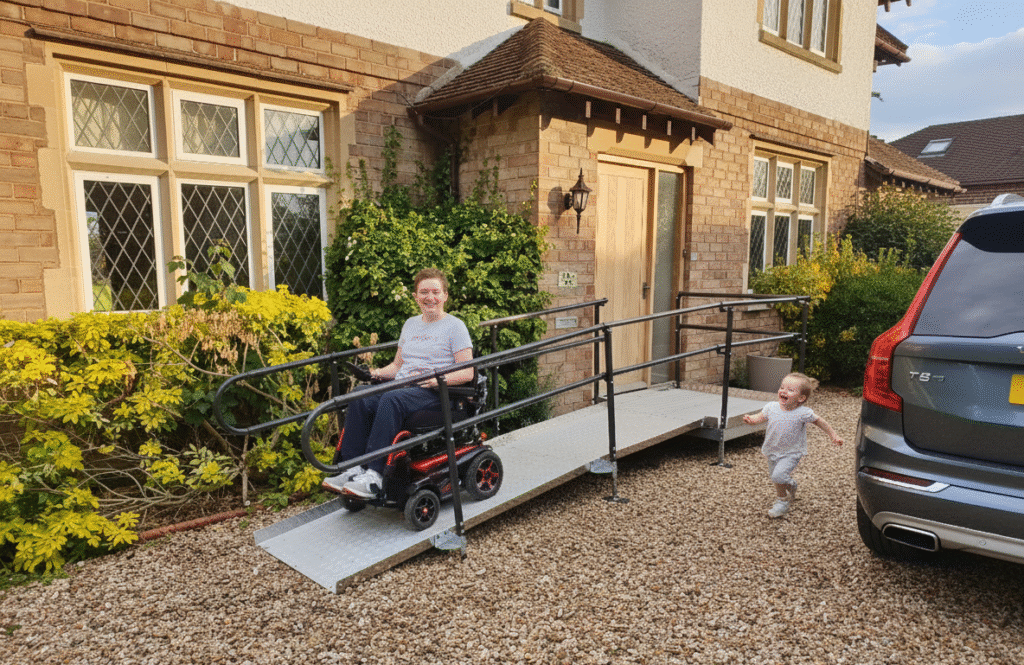
Selecting the right wheelchair access ramp involves considering how often it will be used, the weight it needs to support, the environment (indoor or outdoor), and the height difference it needs to overcome. Choosing the appropriate ramp ensures safety, compliance with UK accessibility standards and ease of use for those who rely on it.
Portable ramps are lightweight and easy to move, making them ideal for temporary or occasional use.
Common Use Cases: Rental homes, visitor access, travel or temporary mobility solutions.
Threshold ramps are low-rise ramps designed to bridge minor height differences within a property.
Common Use Cases: Home entrances, internal doorways and minor step changes.
Modular ramps are durable systems that can be permanent or semi-permanent, designed for long-term use.
Common Use Cases: Public buildings, offices, care facilities and home adaptations requiring long-term accessibility.
These ramps are specifically designed for outdoor use and frequent access points.
Common Use Cases: Shop entrances, schools, public pathways and outdoor community spaces.
Each type of ramp has distinct advantages, and selecting the right one depends on user needs, environmental conditions and regulatory compliance. Ensuring the correct choice improves both safety and accessibility for everyone who uses it.
Access ramps are vital for creating safe and inclusive environments, helping people overcome physical barriers and maintain independence. They are not just practical additions — for many, they are essential for daily life. Ramps are used across homes, public spaces and professional settings in the UK to support mobility, accessibility and compliance with UK standards.
Ramps are crucial for wheelchair users, people with limited balance or mobility, and older adults who find stairs challenging. By providing a smooth, step-free route, wheelchair access ramps enable independence, safety and confidence in everyday activities.
For those adapting a home to support a family member or preparing for future mobility needs, ramps make a significant difference. They allow residents to navigate their property independently, reducing reliance on others and enhancing quality of life.
Businesses, care homes, offices and hospitality venues have a responsibility to ensure accessible entry for everyone. Installing disabled access ramps not only meets UK building regulations and accessibility standards but also demonstrates inclusivity and commitment to all visitors.
Occupational therapists, mobility advisors and other healthcare professionals often specify ramps as part of a broader accessibility assessment. Their expertise ensures that the right type of ramp is chosen to meet both user needs and legal requirements.
Speak to our ramp specialists today and get expert guidance for your project.
When installing access ramps in the UK, compliance with legal and regulatory standards is essential to ensure safety, accessibility and inclusivity. Organisations and property owners must consider the Equality Act 2010, which requires reasonable adjustments to allow disabled people to access buildings and services.
While the original Disability Discrimination Act (DDA) has been superseded, terms like DDA compliant ramps are still commonly used to describe ramps that meet these accessibility requirements. In addition to equality legislation, Building Regulations, particularly Approved Document M, provide guidance on ramp design for new builds or modifications.
These regulations cover important factors such as maximum gradients, landing dimensions, handrails and edge protection to create safe and functional ramps for public and private use. Following these standards not only ensures compliance but also delivers practical, safe and comfortable access for all users.
Ensuring safety is the cornerstone of any access ramp installation. Even a well-intentioned ramp can become a hazard if it is poorly designed, incorrectly installed or not maintained. Professional installers consider multiple factors to create ramps that are safe, reliable and easy to use for everyone.
Selecting the most appropriate access ramp involves balancing user needs with the specific characteristics of the site. A well-chosen ramp ensures safety, ease of use and compliance with UK accessibility standards, while also providing long-term reliability and comfort for those who rely on it.
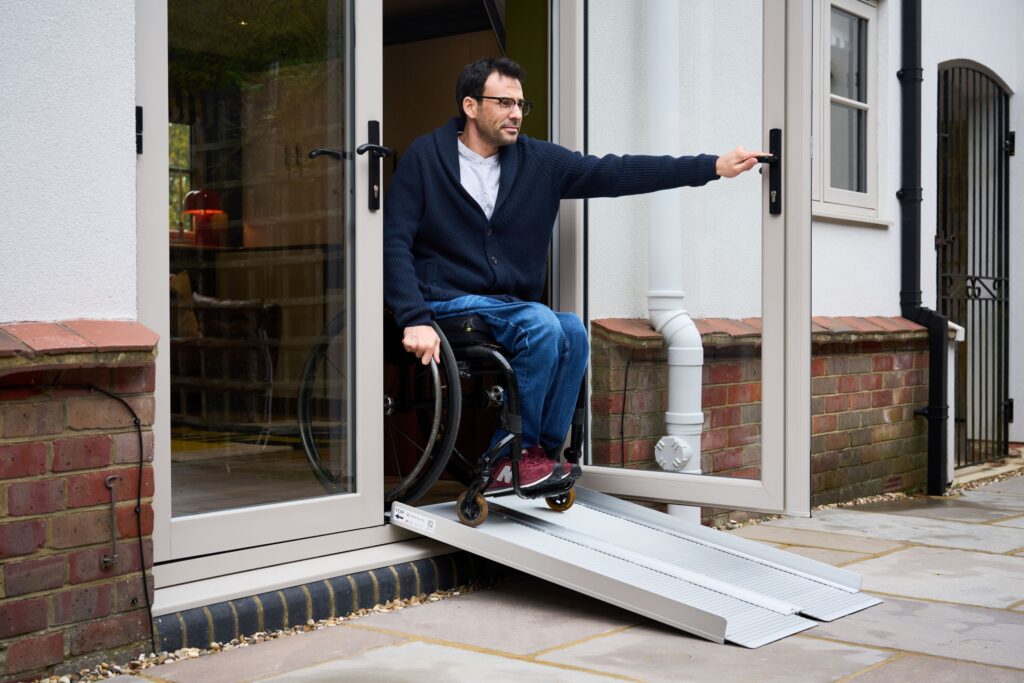
Before choosing a ramp, ask:
For complex installations or high-traffic areas, a professional site survey is invaluable. Experts will measure exact heights and available run space, evaluate the surface and environmental conditions, and recommend the most suitable ramp type and configuration. This ensures not only compliance with DDA and Building Regulations but also a practical, safe and comfortable experience for all users.
Access ramps are more than practical additions, they are essential for promoting independence, safety and inclusivity. When chosen and installed correctly, ramps empower wheelchair users, people with mobility challenges and older adults to navigate homes, workplaces and public spaces with confidence.
At Enable Access, we specialise in providing high-quality wheelchair access ramps and disabled access ramps designed to meet UK standards, including the Equality Act 2010 and Approved Document M guidance. Our expert team offers professional surveys, tailored specifications and installation support to ensure every ramp is safe, reliable and long-lasting.
Investing in the right access ramp with Enable Access not only supports independent living but also demonstrates a commitment to inclusivity. Our solutions help create environments where accessibility is seamless, practical and built to the highest safety standards.
Book a site survey today and get a tailored ramp solution for your property.