


NAIDEX 2026, held at the NEC Birmingham, marked a significant turning point for the accessibility industry in the United Kingdom. The event brought together manufacturers, designers, healthcare professionals and mobility specialists to explore the future of inclusive environments and independent living.
What stood out most was the clear evolution of accessibility solutions UK wide. The focus has shifted far beyond basic compliance and is now centred on personalised, intelligent and user-led design that supports independence at every stage of life.
For manufacturers like Enable Access, this shift reinforces the importance of delivering advanced mobility access solutions that respond to real-world needs rather than generic standards. The growing demand for wheelchair access products that are adaptable, durable and easy to use reflects a market that is becoming more sophisticated and more human focused. This shift is reflected in the growing demand for wheelchair ramps that support everyday independence across homes, workplaces and public buildings.
At its core, NAIDEX 2026 confirmed one thing. Accessibility is no longer just about access. It is about experience, dignity and long-term independence.
One of the strongest messages from NAIDEX 2026 was the industry wide shift beyond simple step-free access. While removing physical barriers remains essential, the conversation has expanded into how spaces feel, function and adapt to users.
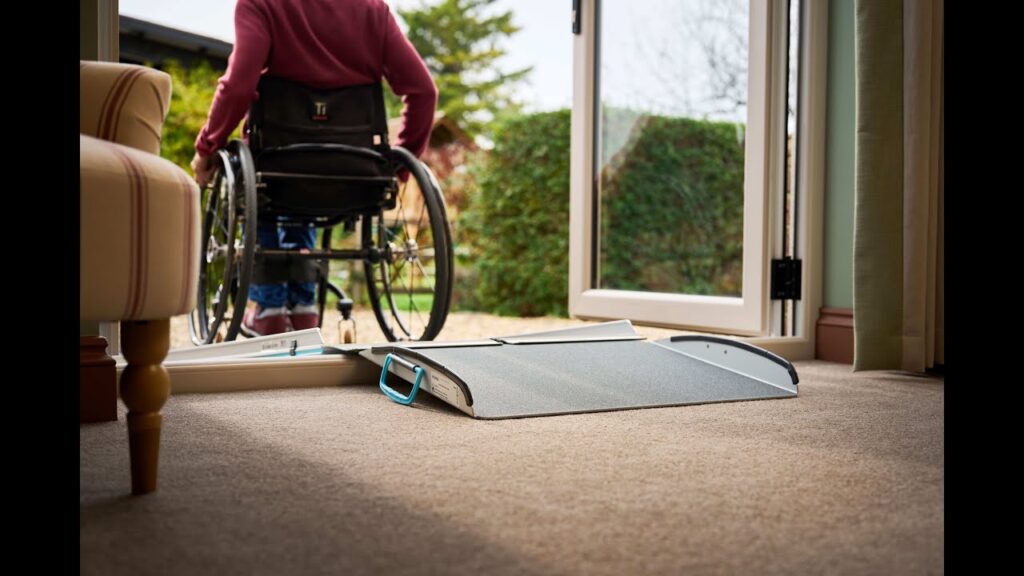
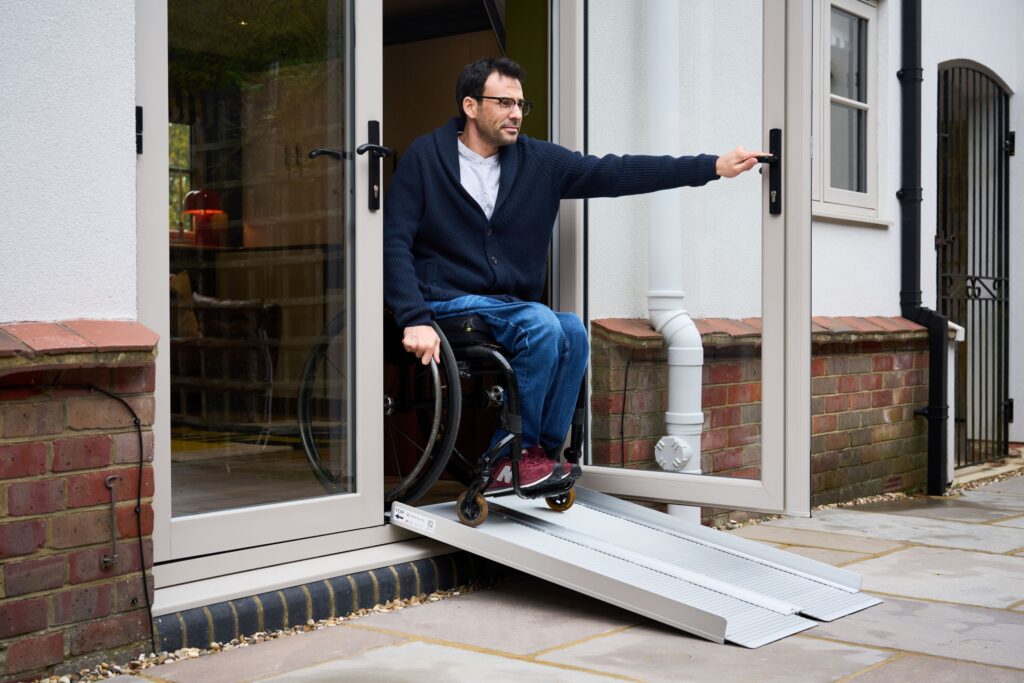
Accessibility solutions providers in the UK are now expected to deliver environments that support dignity and independence, not just compliance. This includes better transitions, smoother movement between spaces and improved usability across daily life. In practical terms, this includes solutions such as Doorline threshold ramps that help remove everyday doorway barriers in both residential and commercial settings.
NAIDEX 2026 highlighted a growing focus on personalised accessibility solutions that reflect different life stages and user needs. From children requiring adaptive support to elderly users seeking independence at home, the industry is moving towards tailored environments.
This evolution is driving demand for accessibility solutions across the UK that are flexible and responsive. Rather than offering one standard solution, providers are increasingly expected to design systems that adapt to individual requirements. For more complex or long-term requirements, modular systems such as Permaramp provide scalable access solutions that can be tailored to different environments.
A major theme from NAIDEX 2026 was the advancement of ramp technology and design. Products are becoming lighter, easier to handle and more intuitive to use. This is reflected in modern solutions including Doorline threshold ramps and portable wheelchair ramps designed for both temporary and everyday access needs.
Modern wheelchair access products are now expected to combine portability with strength, offering users flexibility without compromising safety. This is particularly important in environments where access needs can change frequently.
Key improvements in modern ramp design include:
Another important development showcased at NAIDEX 2026 was the rise of active mobility technologies. These advancements are giving users greater control, range and independence in everyday environments.
From powered mobility enhancements to improved manual wheelchair support systems, the focus is clearly on expanding what users can do rather than limiting movement.
This trend is reshaping expectations across accessibility solutions markets in the UK, as users now seek designs that complement active lifestyles. The demand for integrated mobility access solutions is growing as individuals look for greater freedom across both indoor and outdoor environments.
Mobility is no longer confined to buildings. NAIDEX 2026 highlighted the growing importance of wheelchair-accessible vehicles that support seamless movement between home, transport and public spaces.
These innovations are designed to improve independence by allowing users to travel without barriers. This includes drive from wheelchair systems and rear entry vehicle adaptations that prioritise user control.
The growth of these systems reflects the need for complete accessibility solutions that understand the full mobility journey. Wheelchair access products are now part of a wider ecosystem that includes transport, home access and public infrastructure.
Key developments in this area include:
One of the most forward looking discussions at NAIDEX 2026 was the rise of digital accessibility and artificial intelligence. Technology is now playing a critical role in ensuring that digital platforms are accessible to everyone.
AI powered tools are being used to improve accessibility testing and ensure websites and applications meet inclusive design standards in the UK. This expansion of accessibility beyond physical environments highlights how broad the industry has become.
As accessibility solutions continue to evolve, digital inclusion is becoming just as important as physical access. This shift reinforces the need for holistic mobility access solutions that consider every aspect of user experience.
Neurotechnology was another major focus at NAIDEX 2026, showcasing how advanced systems are improving rehabilitation and personalised care. Pressure mapping, adaptive support systems and data driven rehabilitation tools are reshaping how mobility support is delivered.
This move towards precision-based care is influencing expectations for wheelchair access products and the wider accessibility solutions markets. Solutions are becoming more tailored, data informed and user specific.
The result is a more intelligent approach to mobility access solutions that prioritise long-term outcomes rather than short-term fixes.
A key highlight of NAIDEX 2026 was the emphasis on real world testing environments. Visitors were able to experience mobility equipment across varied surfaces and conditions, helping bridge the gap between theory and practice. Enable Access played a central role in this by sponsoring the test track and providing all ramps free of charge, ensuring attendees could fully explore and evaluate accessibility solutions in a realistic setting.
This approach is reshaping how wheelchair access products are designed and evaluated. Performance is no longer judged only in controlled environments but in everyday conditions such as uneven ground, outdoor terrain and transitional spaces.
This shift strengthens the demand for reliable accessibility solutions that perform consistently in real-life usage scenarios.
Key benefits of real world testing include:
Beyond physical infrastructure, NAIDEX 2026 also highlighted the growing role of accessibility in employment and social inclusion. Initiatives focused on connecting disabled professionals with employers showed how accessibility now extends into opportunity creation.
This reflects the importance of inclusive design principles across workplaces, education and public services. Accessibility is no longer an add on. It is becoming a core requirement for participation in modern society.
As this trend continues, demand for comprehensive mobility access solutions will continue to rise across all sectors.
NAIDEX 2026 clearly demonstrated that the future of accessibility is personalised, intelligent and fully integrated into everyday life. The industry is moving away from basic compliance and towards meaningful user-focused design that enhances independence and dignity.
For Enable Access, these insights align strongly with the continued development of innovative wheelchair access products and practical mobility access solutions that serve real-world needs.
As accessibility solutions in the UK continue to evolve, the focus will remain on delivering adaptable, reliable and user-centred systems that improve everyday living. From portable ramps to modular systems, the future of access is about creating environments where everyone can move freely and confidently.
Enable Access remains committed to supporting this future through practical engineering, expert guidance and solutions designed to remove barriers at every level.