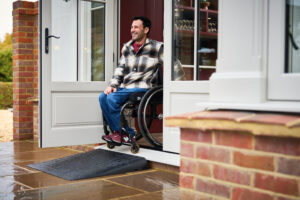


Access to buildings is often limited by steps, uneven ground or temporary barriers, but for many homes, care environments and commercial properties, achieving safe and reliable wheelchair access requires more than a basic solution. This is where a modular ramp system becomes essential.
A modular wheelchair ramp provides a flexible, durable and fully adaptable accessibility solution designed for both short term challenges and long term requirements. It is widely used across the UK in residential, healthcare and public sector environments where safe step-free access is a priority.
Understanding when and why you need a modular ramp system is critical for ensuring safety, compliance and independence for wheelchair users and individuals with reduced mobility.
A modular ramp system is a pre-engineered accessibility structure made from interlocking ramp sections that can be configured to suit different building layouts and height requirements.
Unlike temporary wheelchair ramps or fixed concrete structures, modular access ramps offer a semi permanent solution that can be adapted, extended or reconfigured over time.

These systems are commonly manufactured from durable materials such as aluminium or galvanised steel and are designed with safety features including non-slip surfaces and integrated handrails.
Key characteristics of modular ramp systems include:
Modular ramps are ideal for wheelchair access in environments where flexibility and long term reliability are required.
Understanding when to move beyond portable ramps or threshold ramps is essential for maintaining safe access.
A modular ramp system becomes necessary in the following situations:
Portable wheelchair ramps are suitable for occasional use but they can become unstable or unsafe when used frequently or over higher steps. If daily access is required, a modular ramp provides significantly improved stability and safety.
Buildings with multiple steps, raised entrances or uneven outdoor surfaces often require a more engineered solution. Modular ramp systems can be designed to accommodate complex gradients and space limitations.
In environments such as care homes, schools, hospitals and commercial buildings, accessibility is not occasional. It is constant. A modular ramp system ensures consistent, reliable access throughout the day.
UK accessibility expectations and duty of care responsibilities mean that employers and property owners must provide safe access solutions. Modular ramps support compliance with accessibility guidelines and reduce safety risks.
Outdoor access points exposed to rain, frost, or uneven ground require a slip resistant and durable surface. Modular ramps are designed to maintain performance in all weather conditions, improving safety for wheelchair users and carers.
A modular ramp system is not just a temporary fix. It is a long term accessibility investment designed to evolve with user needs and building requirements.
Unlike portable access ramps that may need frequent replacement, modular systems offer durability and adaptability over time.
Key reasons modular ramps are considered a long term solution include:
For organizations planning long term accessibility improvements, modular ramp systems deliver both flexibility and reliability.
When installing access ramps in the UK, compliance with legal and regulatory standards is essential to ensure safety, accessibility and inclusivity. Organisations and property owners must consider the Equality Act 2010, which requires reasonable adjustments to allow disabled people to access buildings and services.
While the original Disability Discrimination Act (DDA) has been superseded, terms like DDA compliant ramps are still commonly used to describe ramps that meet these accessibility requirements. In addition to equality legislation, Building Regulations, particularly Approved Document M, provide guidance on ramp design for new builds or modifications.
These regulations cover important factors such as maximum gradients, landing dimensions, handrails and edge protection to create safe and functional ramps for public and private use. Following these standards not only ensures compliance but also delivers practical, safe and comfortable access for all users.
Modular ramps are widely used across the UK because they provide a balance of safety, flexibility and compliance.
The main benefits include:
Enhanced accessibility for all users: They create safe and smooth step free access for wheelchair users, mobility scooter users and individuals with limited mobility.
Custom built configurations: Each modular ramp installation can be tailored to suit specific building layouts, entrance heights and available space.
Strong and durable construction: Designed for long term use, modular ramps offer high load capacity and resistance to wear and environmental conditions.
Improved safety features: Non slip surfaces, handrails and stable foundations reduce the risk of accidents during use.
Cost effective long term investment: While initial installation may be higher than portable ramps, modular systems reduce ongoing replacement and maintenance costs.
Suitable for multiple environments: They are widely used in residential properties, healthcare facilities, educational buildings and public access areas.
Choosing the right accessibility solution depends on usage frequency, environment and long term requirements.
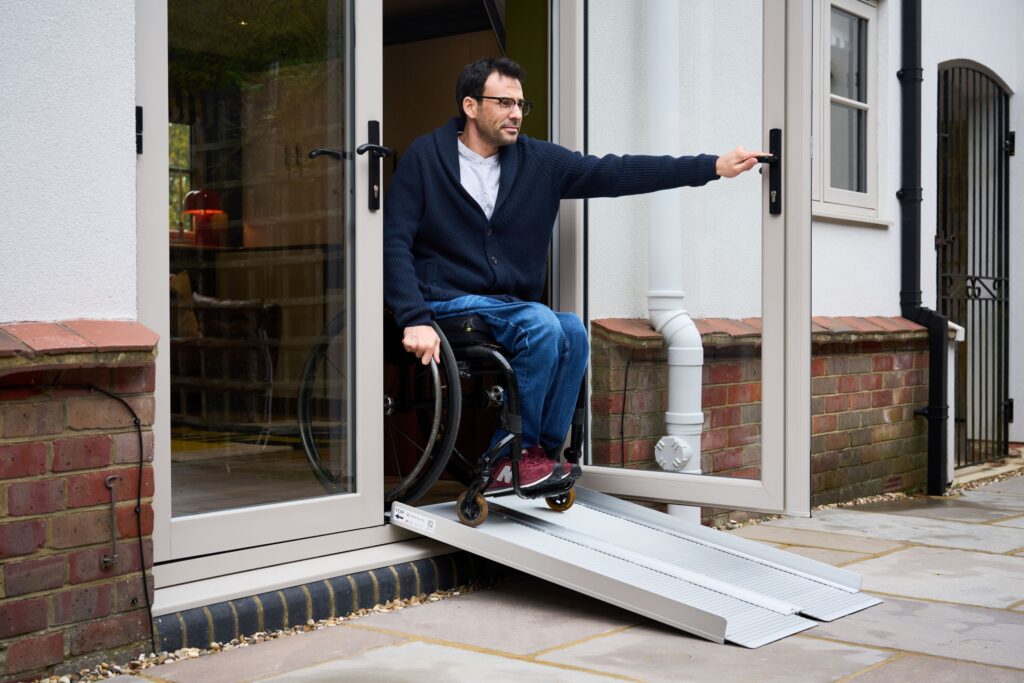
Ramp Type | Best Suited For | Key Features | Limitations |
Temporary or occasional use such as travel or short term access needs | Lightweight, easy to carry, quick to deploy, no installation required | Not suitable for daily use, limited weight capacity, less stable on uneven ground | |
Semi permanent or long term accessibility needs in residential, commercial and healthcare settings | Highly flexible, strong structural design, customisable layouts, weather resistant, scalable over time | Requires professional installation and planning | |
Permanent concrete ramps | Fully fixed, long term structural accessibility solutions for buildings with constant access requirements | Extremely durable, permanent structure, low maintenance once installed | High installation cost, no flexibility for redesign or relocation |
Modular ramp systems are widely used across various sectors where safe and reliable accessibility is essential.
Common applications include:
In each of these environments, modular ramps play a key role in improving independent mobility and ensuring safe entry and exit points.
A modular ramp system is one of the most effective solutions for creating safe, reliable and long lasting wheelchair access in both residential and commercial environments. Knowing more about when to use modular ramps and why they are ideal for accessibility helps with safety, compliance and long term practicality decisions.
For environments where portable ramps are no longer sufficient, modular ramp systems provide a scalable and dependable solution that supports independence and inclusive access.
If you are planning an accessibility upgrade or need expert guidance on selecting the right wheelchair ramp system, Enable Access have in-house technical expertise to guide your decision. We also provide trusted installers for all modular access solutions to ensure safety and compliance and allow the user greater independence.