


Ensuring the accessibility of buildings is a fundamental consideration under UK law, with specific legal requirements applying in many public, commercial and residential contexts. Businesses, landlords and public bodies must meet Equality Act access requirements to prevent discrimination and provide safe, dignified access for people with disabilities. As expectations around inclusion continue to rise, understanding how accessibility laws apply to your premises has never been more important.
This guide explains what the Equality Act requires, how it links with disabled access building regulations, and where UK mobility ramp regulations and wheelchair ramp legal requirements fit into overall building compliance.
The Equality Act 2010 requires service providers, employers and organisations to make reasonable adjustments so that disabled people are not placed at a substantial disadvantage compared with non-disabled people.
In practical terms, this means:
For many premises, this directly relates to entrances, changes in level, corridors and emergency evacuation routes, all areas where ramps and handrails play a key role.
Importantly, the law does not only apply to new buildings. Existing properties must also take reasonable steps to improve accessibility when barriers are identified.
While the Equality Act sets out legal duties around discrimination and access, building design is also governed by the UK Building Regulations, particularly Approved Document M, which covers access to and use of buildings.
Together, these form the basis of disabled access building regulations, influencing:
Building Regulations typically apply when constructing or significantly altering a building, while the Equality Act applies continuously throughout the building’s use. Even if a building meets Approved Document M, it may still fail Equality Act access requirements if disabled users cannot reasonably access services.
This is why many organisations use ramps as part of ongoing compliance improvements.
Ramps are one of the most common and effective ways to provide step-free access, but they must be designed correctly to be safe and compliant.
Under UK mobility ramp regulations, key considerations include:
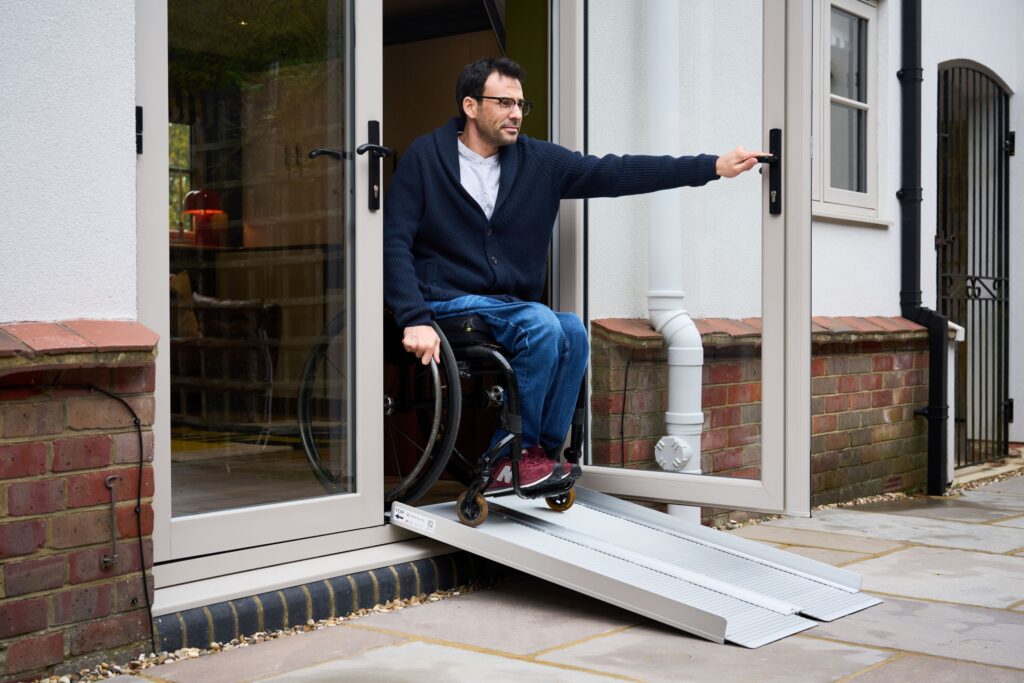
Permanent ramps are often required for main public entrances, while portable or modular ramps may be suitable for secondary access points or temporary solutions.
Using the wrong ramp, or no ramp at all, can place building owners at risk of non-compliance with both safety guidance and Equality Act obligations.
When considering wheelchair ramp legal requirements, the central issue under the Equality Act is whether barriers to access can be removed through reasonable adjustment. What is considered reasonable depends on several factors, including the building’s layout, how often the public uses the premises, the cost in relation to the size of the organisation, and whether installation is practically achievable.
For many businesses, adding a ramp is one of the most straightforward and cost-effective ways to improve access and demonstrate a clear commitment to inclusion. However, providing a ramp is not enough on its own, it must also be safe and suitable for real-world use. Ramps should be properly secured, designed to support expected user weights, and compatible with manual wheelchairs, powered wheelchairs and mobility scooters where appropriate.
Poorly fitted or unsuitable ramps can introduce new hazards, increasing the risk of accidents and potential liability. This is why compliant design and correct installation are essential for both safety and legal protection.
Choosing the right type of wheelchair ramp depends on how a building is used, the level of access required, and what counts as a reasonable adjustment under the Equality Act. Both permanent and portable ramps can support compliance, but they serve different purposes and come with different expectations for availability, safety and ease of use.
Permanent and modular ramp systems are best suited to main entrances, high-footfall locations and sites requiring long-term compliance upgrades. These solutions are fixed in place and designed to meet disabled access building regulations, including correct gradients, landing platforms, and handrail requirements where needed. Modular ramps can be configured to suit complex site layouts and changing heights, making them a reliable option for businesses.
Portable wheelchair ramps are more appropriate for temporary access needs, smaller level changes or secondary entrances that are not used as primary public access points. While portable ramps can form part of Equality Act access requirements, they must be readily available whenever needed, easy for staff to deploy, and suitable for the types of mobility equipment being used. If a ramp is stored away, difficult to position or requires excessive assistance, it may not be considered a reasonable or effective access solution under the Equality Act.
There is no single product that the Equality Act mandates, but if steps or level changes prevent disabled people from accessing your premises, some form of access solution is required.
If structural alterations are not practical, ramps are often the most reasonable adjustment available. This is the reason why ramps are widely used across:
Failing to address access barriers can expose organisations to complaints, legal action and reputational damage.
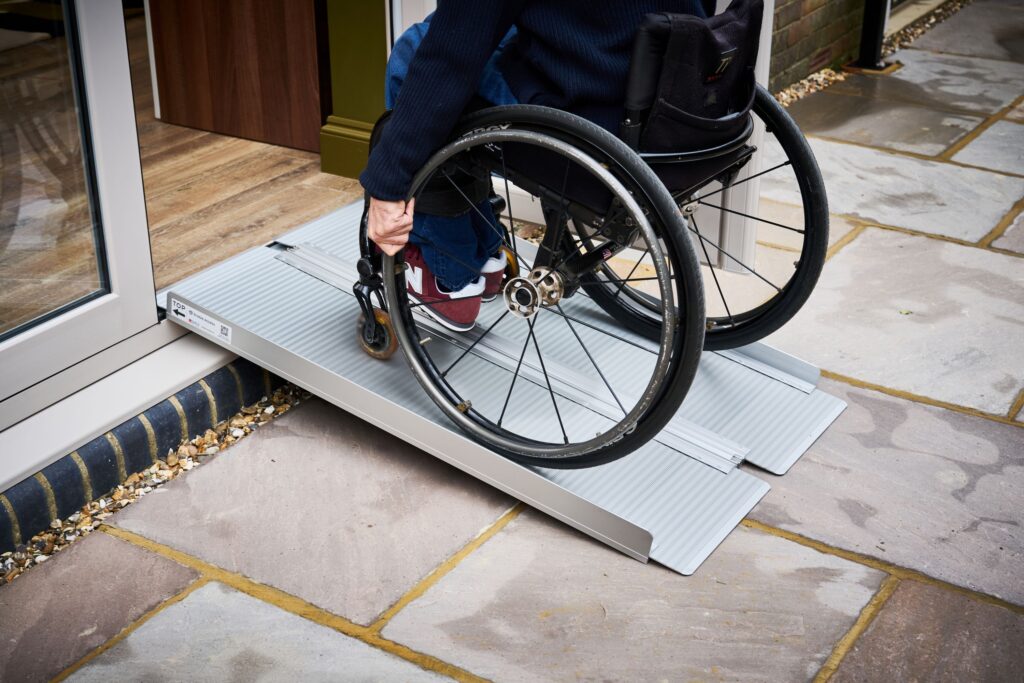
Building compliance for wheelchair ramps goes beyond simply providing access, ramps must be designed and installed to meet specific safety and usability standards. This includes correct gradient ratios, stable and non-slip surfaces, adequate width for wheelchair and mobility scooter use, and level landing areas at the top and bottom of the ramp.
In many cases, handrails and edge protection are also required, particularly for longer or permanent installations. Ensuring ramps meet disabled access building regulations not only supports Equality Act access requirements but also reduces the risk of accidents, complaints and potential legal liability for building owners and operators.
Although legislation itself may not change every year, expectations around inclusion and risk management continue to rise. Proactive compliance protects your organisation against:
More importantly, it creates environments that are safer, more welcoming and easier to use for everyone.
Investing in compliant access solutions today helps avoid urgent and costly modifications later.
Understanding Equality Act access requirements is only the first step, selecting the right wheelchair ramp solution for your specific building is what ensures true compliance and safe, practical access for users. Whether you require portable ramps for short-term needs, modular ramp systems for permanent entrances, or support with wider accessibility planning, expert advice helps you avoid costly mistakes and ensures your solutions meet both legal and operational expectations.
If you’re uncertain whether your premises fully comply with disabled access building regulations, a professional accessibility assessment can identify potential risks and recommend suitable mobility ramp solutions aligned with UK building compliance standards. Taking proactive steps now not only supports legal compliance, but also demonstrates a genuine commitment to inclusive, barrier-free access for everyone.