


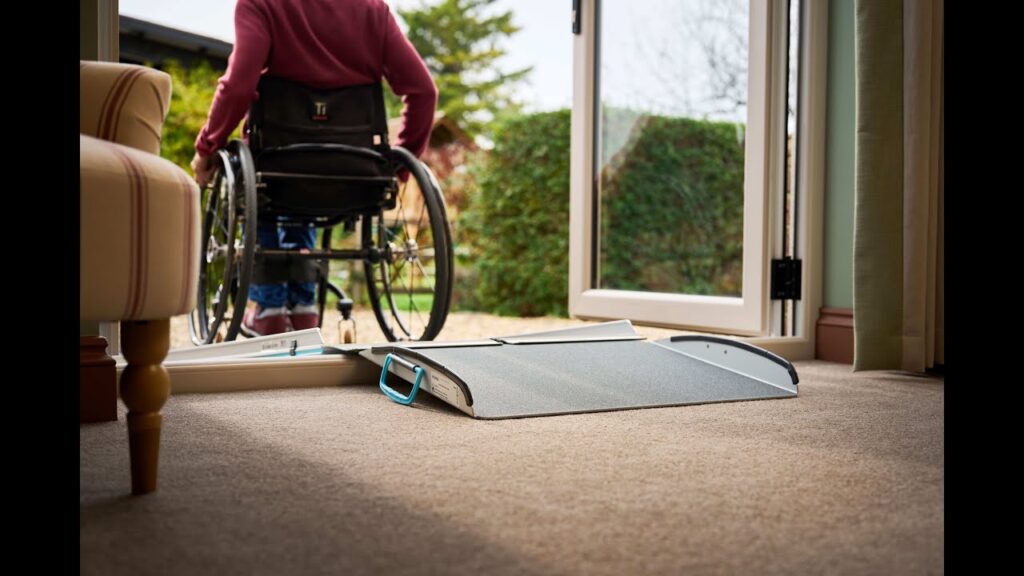
Portable ramps are practical mobility access solutions designed to help users safely navigate steps, thresholds and small level changes. They are widely used across homes, care environments and public spaces to support wheelchairs, mobility scooters, rollators and walking aids.
In most cases, portable wheelchair ramps are chosen for their flexibility and ease of use. They can be quickly positioned when needed and stored away when not in use, making them ideal for both temporary and frequent access requirements.
Common uses include:
Proper storage and maintenance ensure these wheelchair access products continue to perform safely and effectively over time.
Not all portable ramps require the same level of care. The material used directly impacts durability, cleaning requirements and long term performance.
Aluminium portable ramps are among the most common mobility access solutions due to their strength and corrosion resistance. They are low maintenance but still require regular cleaning to prevent dirt build up and maintain grip performance.
Rubber threshold style ramps offer strong grip and stability but can require more frequent surface cleaning, especially in outdoor environments where debris and moisture are present.

Key differences include:
Understanding material differences helps users choose the right wheelchair ramps and maintain them correctly for long term safety.
Keeping portable wheelchair ramps clean is essential for maintaining safe and reliable performance. Dirt, dust and outdoor debris can build up over time and reduce grip, which may impact stability and overall safety during use. Regular cleaning helps preserve performance and extends the lifespan of mobility access solutions.
A simple cleaning routine is usually enough to maintain wheelchair access products. The aim is to remove dirt and debris without damaging the surface or reducing anti-slip performance.
Use warm water with a mild detergent to break down dirt, then gently clean the surface using a soft brush or cloth. Pay close attention to anti-slip areas where debris can collect. Rinse thoroughly and ensure the ramp is completely dry before folding or storing.
Using incorrect cleaning methods can damage the ramp surface and reduce safety. Harsh chemicals, abrasive tools or aggressive cleaning techniques can weaken grip and shorten product lifespan.
Avoid bleach, strong chemical cleaners, wire brushes, abrasive pads or high pressure washing, as these can damage both the surface and structural components.
Outdoor mobility access solutions are exposed to weather, dirt and moisture, so they require more frequent cleaning. Regular maintenance helps maintain grip and ensures consistent performance in all conditions.
This is especially important in high use or wet environments, where maintaining clean surfaces directly supports safe and reliable accessibility solutions UK standards.
Routine inspections are a critical part of maintaining wheelchair ramps and ensuring user safety.
Before and after use, check the following:
If any damage is identified, the ramp should not be used until it has been assessed. Regular inspection helps extend the lifespan of mobility access solutions and ensures continued safety in everyday use.
Proper storage plays a major role in preserving the quality of portable wheelchair ramps.
Indoor storage is always recommended where possible. Ramps should be kept in a dry, clean space away from heavy objects that could cause bending or pressure damage. Folding ramps should be locked securely before storage.
When indoor space is limited, outdoor storage may be necessary. In these cases, ramps should be:
Correct storage practices ensure mobility access solutions remain safe and reliable for long term use.
Many issues with wheelchair access products are caused by simple maintenance mistakes.
Avoid the following:
Preventing these mistakes significantly improves the lifespan of portable ramps and ensures consistent performance across different accessibility solutions UK environments.
Seasonal changes can affect how mobility access solutions perform.
In winter, ice and moisture can reduce grip, so ramps should be cleaned regularly and kept dry when not in use. In summer, prolonged heat exposure may affect certain materials, making storage conditions important.
During wet seasons, more frequent cleaning is recommended to maintain safe wheelchair access products performance.
Winter: remove ice, prevent surface freezing
Summer: avoid prolonged sun exposure during storage
Rainy conditions: dry thoroughly after every use
Adapting maintenance routines helps ensure safe and reliable accessibility solutions UK performance all year round.
Portable wheelchair ramps are built for durability, but regular use and exposure to different conditions can lead to wear over time. Knowing when to repair or replace a ramp is essential to maintain safe and reliable mobility access solutions.
Minor issues can often be managed with basic maintenance or small adjustments. This helps extend the life of the ramp while maintaining safe use.
Repair is suitable when there is light surface wear, minor dirt build up affecting grip or small loose fittings that can be tightened. Simple hinge adjustments or cleaning may also restore proper function.
Replacement is necessary when the ramp no longer meets safety standards. Structural issues cannot be safely repaired and may increase risk during use.
A ramp should be replaced if there is visible bending, reduced stability, worn anti-slip surfaces or damaged or unstable folding joints.
Using high quality wheelchair access products from trusted providers like Enable Access, ensures that ramps are lightweight, durable and much safer due to the Gripline™ technology that is our unique anti-slip solution.

Safe storage and regular maintenance are essential for keeping portable wheelchair ramps reliable, safe and effective over time. When cared for properly, these mobility access solutions continue to support independence, safety, and ease of movement across homes, workplaces and public environments.
Enable Access is committed to delivering high quality wheelchair access products designed for real world use, supporting accessibility solutions UK standards and promoting inclusive design UK principles.
For long term safety and performance, always follow proper cleaning, inspection and storage practices. The right care ensures your ramp continues to provide dependable access whenever it is needed.